AI Engineering
Building RAG Systems That People Can Actually Trust
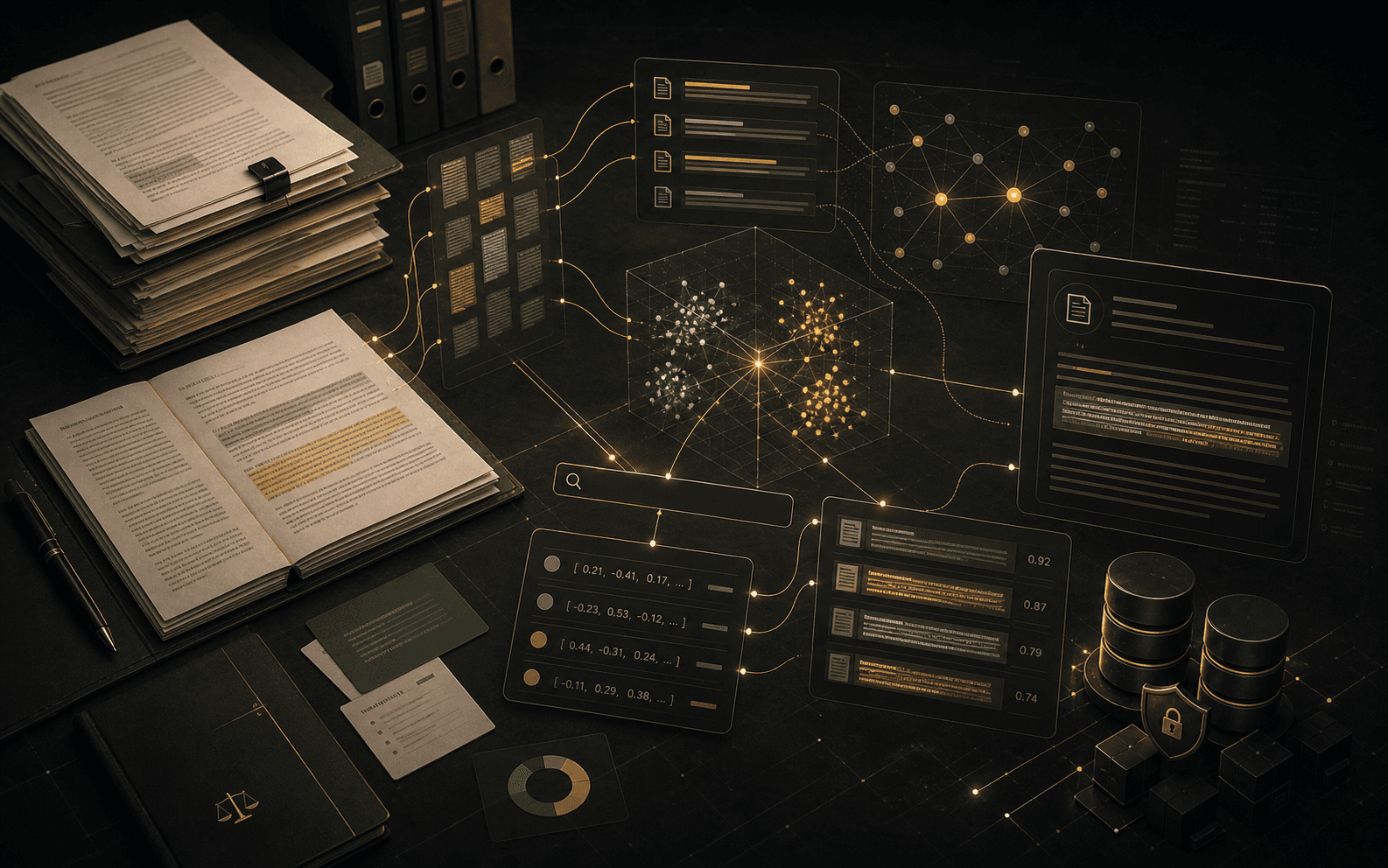
Retrieval augmented generation has become the default architecture for giving language models access to private knowledge. Upload a pile of documents, split them into chunks, store embeddings, retrieve the closest matches, and ask the model to answer from context. That is the demo version.
The production version is more demanding. In real businesses, documents contradict each other. Policies change. Users ask vague questions. A legal clause may depend on definitions twenty pages earlier. A compliance answer may need to say no, not produce a confident paragraph. The job is not simply retrieval. The job is controlled reasoning over a messy knowledge base.
The first design decision is scope. A trustworthy RAG system should know exactly what it is allowed to answer. If the system covers employment contracts, do not let it improvise immigration advice. If it indexes internal policies, do not let it answer as though it understands external law. Narrow scope is not a weakness. It is how reliability starts.
The second decision is source quality. Many teams spend weeks tuning prompts while feeding the model stale PDFs, duplicate files, OCR errors, and poorly named exports. Retrieval quality starts before embeddings. Clean document pipelines, metadata, versioning, access permissions, and deletion workflows matter more than clever prompt phrasing.
Chunking also deserves more respect than it usually gets. Splitting every document into equal token windows is simple, but legal, financial, and operational documents are structured by headings, clauses, definitions, tables, and appendices. A good system keeps those boundaries where possible. It retrieves the unit of meaning, not just the nearest block of text.
Then comes citation behavior. Users need to see where an answer came from. Citations should point to the exact document section that influenced the response, not just a file that happened to be retrieved. If the source is weak, missing, or contradictory, the answer should say that plainly. A system that can admit uncertainty is more useful than one that always sounds polished.
Evaluation is the part most teams skip. You need a test set of real questions, expected source documents, acceptable answers, refusal cases, and edge cases. Run it every time you change the prompt, retrieval settings, embedding model, chunking strategy, or document pipeline. Without evaluation, you are tuning by vibes.
Security is not optional. RAG systems often sit on top of sensitive documents: contracts, HR files, finance reports, case notes, and client correspondence. Retrieval must respect user permissions before the model sees context. The model should never be asked to ignore data it should not have received in the first place.
A dependable RAG system is less like a chatbot and more like an information product. It has ingestion, indexing, permissions, retrieval, generation, citations, evaluation, monitoring, and human escalation. The model is one component. The product is the system around it.
The best RAG experiences feel calm. They answer what they can prove, cite what they used, refuse what they cannot support, and make it easy for a human to inspect the trail. That is what turns AI from an impressive demo into infrastructure people can trust.

AhmedFayyaz